
How to Eat Soaked Almonds Daily for Best Results

By A Reza, Health & Nutrition Writer
4 July 2026 · 7 min read · 0 views
Soaked almonds pack more nutrition than raw ones. Here's exactly how to eat them daily — the right time, quantity, and simple habits that actually work.
How to Eat Soaked Almonds Daily for Best Results
Here's something that stops most people mid-scroll: soaking almonds overnight can increase the bioavailability of their nutrients noticeably — all because of one thing a thin brown skin is hiding.
That skin contains tannins and phytic acid, compounds that bind to minerals like zinc, iron, and calcium and slow down how well your body absorbs them. Peel that skin away after soaking, and suddenly you're getting more from every single almond. It's not magic — it's just basic food science, and once you know it, you can't un-know it.
So if you've been tossing raw almonds (Prunus dulcis) into your mouth straight from the packet, this article is your nudge to do things a little differently.
Why Soaking Almonds Actually Matters
Raw almonds are already nutritious — good fats, vitamin E, magnesium, protein, fiber. But phytic acid, often called an "antinutrient," reduces how much of that goodness you actually absorb. Soaking softens the skin, neutralizes a portion of the phytic acid, and makes the almonds easier to digest. People who complain that nuts feel "heavy" on their stomach often find soaked almonds a completely different experience.
There's another quiet benefit: soaked almonds are easier to chew. For older adults, kids, or anyone with sensitive teeth, that matters more than people admit.
If you're comparing your nut choices more broadly, the article on Walnuts vs Almonds: Which Nut Is Healthier? is worth a read — it puts almonds in honest context without overhyping either nut.
How to Soak Almonds: The Simple Method
No equipment required. Here's what to do:
- Take 6–10 raw almonds (start with 6 if you're new to this).
- Rinse them under cool water.
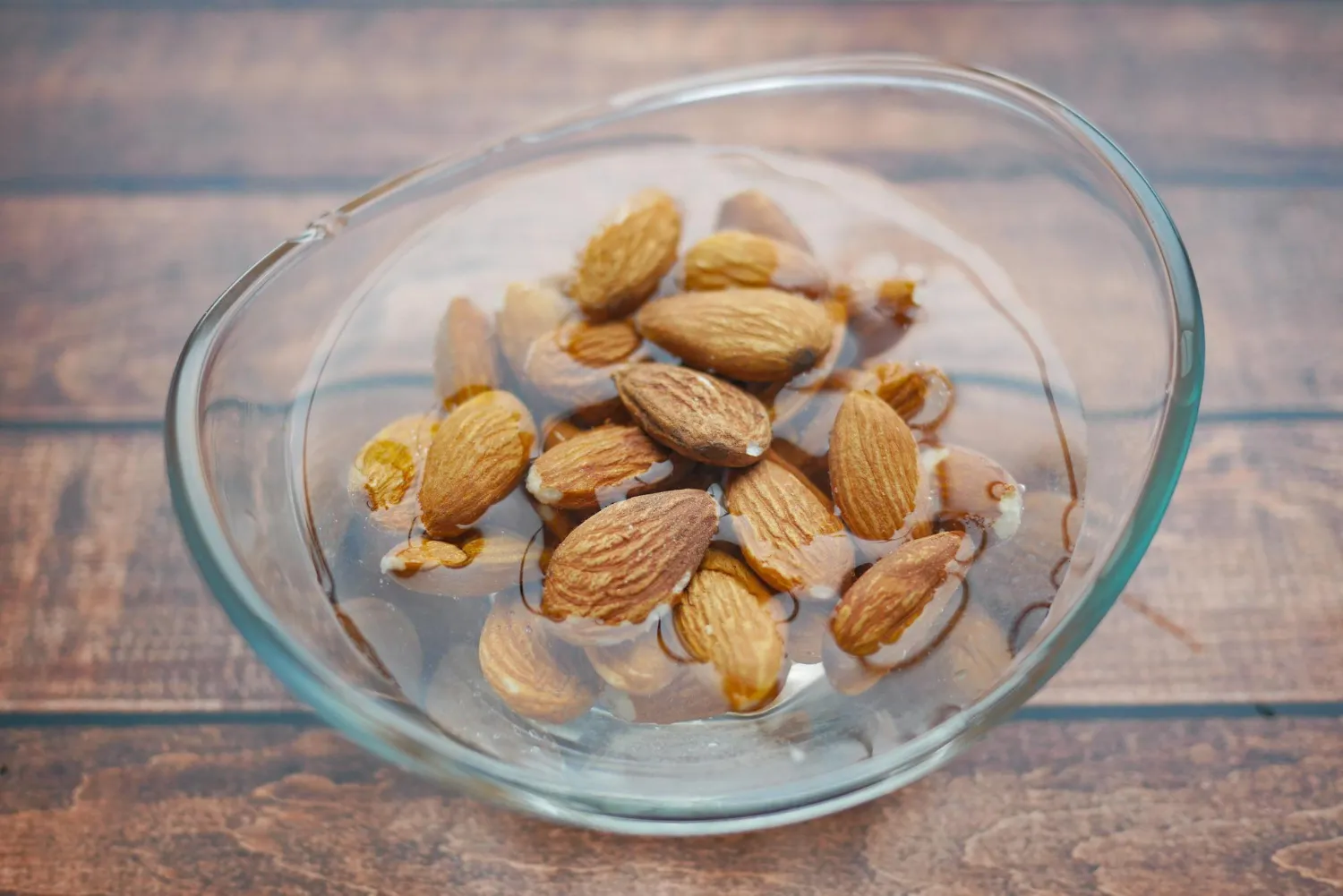
- Place in a small bowl and cover with water — about double the volume of the almonds.
- Let them soak overnight, roughly 8–12 hours.
- In the morning, drain the water (don't drink it — it contains the leached phytic acid and tannins).
- Peel the skin off — it slips right off with a gentle squeeze. This step is worth doing.
- Eat them fresh, or store peeled soaked almonds in the fridge for up to two days.
That's genuinely all there is to it. The hardest part is remembering to soak them the night before.
How Many Soaked Almonds Should You Eat Per Day?
Most nutrition experts suggest 6 to 10 almonds daily for most adults. This gives you a meaningful dose of healthy fats, vitamin E, and magnesium without going overboard on calories. A handful of almonds sits around 160–180 calories, so they fit comfortably into most diets.
For children, 4–6 soaked, peeled almonds in the morning is a common recommendation in Indian households — and there's good reason behind it. The combination of healthy fats, B vitamins, and magnesium supports focus and energy through a school morning.
Pregnant women can safely include almonds daily too, though it's always sensible to check with your doctor about quantities if you have specific dietary considerations.

The Best Time to Eat Soaked Almonds
First thing in the morning, on an empty stomach — this is the sweet spot. Your digestive system is primed to absorb nutrients efficiently after an overnight fast, and the healthy fats in almonds give your metabolism a gentle, steady kick-start.
Eating them 20–30 minutes before breakfast works particularly well. Some people prefer eating soaked almonds with a glass of warm water or alongside their morning chai — both are fine.
Can you eat them at other times? Absolutely. A mid-morning snack or pre-workout handful works well too. What you want to avoid is eating a large quantity late at night, mostly because the caloric density doesn't serve you as well when you're winding down.
Creative Ways to Eat Soaked Almonds Daily (Without Getting Bored)
Eating the same six almonds every morning sounds simple — but let's be honest, it can get monotonous fast. Here are a few ways to keep it interesting:
- With warm milk: A traditional Indian approach — blend 4–5 soaked almonds into a paste and stir into warm milk with a pinch of cardamom. Genuinely delicious.
- Chopped over oats or upma: Adds crunch and nutrition without any extra effort.
- Blended into smoothies: Soaked almonds blend far more smoothly than raw ones — no gritty texture.
- Mixed with soaked raisins or dates: A simple energy snack that also gives you natural sugars and iron.
- In salads: Slice them thin and toss over a green salad or raita.
What Soaked Almonds Can Do for Your Health Over Time
Let's be straightforward here — almonds are not a cure for anything. But eaten consistently, they contribute meaningfully to several health areas.
Heart health: The monounsaturated fats and magnesium in almonds support healthy cholesterol levels and blood pressure. If heart health is a priority for you, the guide on Best Nuts for Heart Health gives a fuller picture of where almonds stand.
Brain and memory: Almonds contain riboflavin and L-carnitine, both linked to neurological function. This is probably why "eat almonds to sharpen your mind" has been Indian grandmothers' advice for centuries — there's genuine science behind the folklore.
Blood sugar management: The fiber and healthy fats slow glucose absorption, making soaked almonds a smart snack for people managing diabetes or blood sugar fluctuations.
Skin and hair: Vitamin E is a fat-soluble antioxidant, and almonds are one of the richest food sources of it. Regular intake supports skin elasticity and may contribute to healthier hair over time — though expecting dramatic changes quickly is unrealistic.
Gut health: Softer, pre-soaked almonds are easier on digestion. If gut health is something you're actively working on, pairing almonds with other gut-friendly foods is a smart move — the article on Best Seeds for Gut Health has practical ideas.
A Few Things to Watch Out For
- Almond allergies: Tree nut allergies are real and can be serious. If you've never eaten almonds before and have a history of nut allergies, check with a doctor first.
- Portion creep: Almonds are calorie-dense. Eating 20–25 thinking "more is better" adds up quickly. Stick to 6–10.
- Don't reuse the soaking water: It contains the compounds you were trying to reduce.
- Mold risk: If almonds smell off or look discolored after soaking, discard them. Always use fresh, good-quality raw almonds.
Latest Articles

How to Feed Goats During Monsoon Season
Monsoon changes everything for goat farmers. Learn exactly what to feed your goats during the rainy season to keep them healthy, productive, and disease-free.

Best Feed for Goats in Summer Heat
Struggling to keep your goats healthy in hot weather? Discover the best summer feed for goats to maintain weight, milk, and energy when temperatures soar.

Goat Milk for Lactose Intolerance: Does It Help?
Think goat milk is lactose-free? It's not — but it may still be easier to digest. Here's what the science actually says about goat milk and lactose intolerance.

Is Goat Meat Good for Weight Loss?
Wondering if goat meat fits into a weight loss diet? Here's what its nutrition profile really means for your goals — no fluff, just facts.

Goat Milk vs Cow Milk: Which Is Better for You?
Goat milk vs cow milk — which should you choose? Compare nutrition, digestion, taste, and health benefits to find the best fit for your diet.

What Do Sheep Eat for Best Growth?
Wondering what sheep eat for healthy growth? This guide covers the best feed, forage, minerals, and feeding tips to raise thriving, fast-growing sheep.
Frequently Asked Questions
⚕️ Medical Disclaimer
This article is for informational and educational purposes only and is not a substitute for professional medical advice, diagnosis, or treatment. Always consult a qualified healthcare provider with any questions about a medical condition. Read full disclaimer.
Editorial note: This article was researched and written with the assistance of AI tools and reviewed by the Nutrikoo editorial team for accuracy and clarity. It is for general information only and is not medical advice. See our editorial policy.
Get healthy tips in your inbox
Join the Nutrikoo newsletter for science-backed nutrition, recipes and wellness — no spam, unsubscribe anytime.